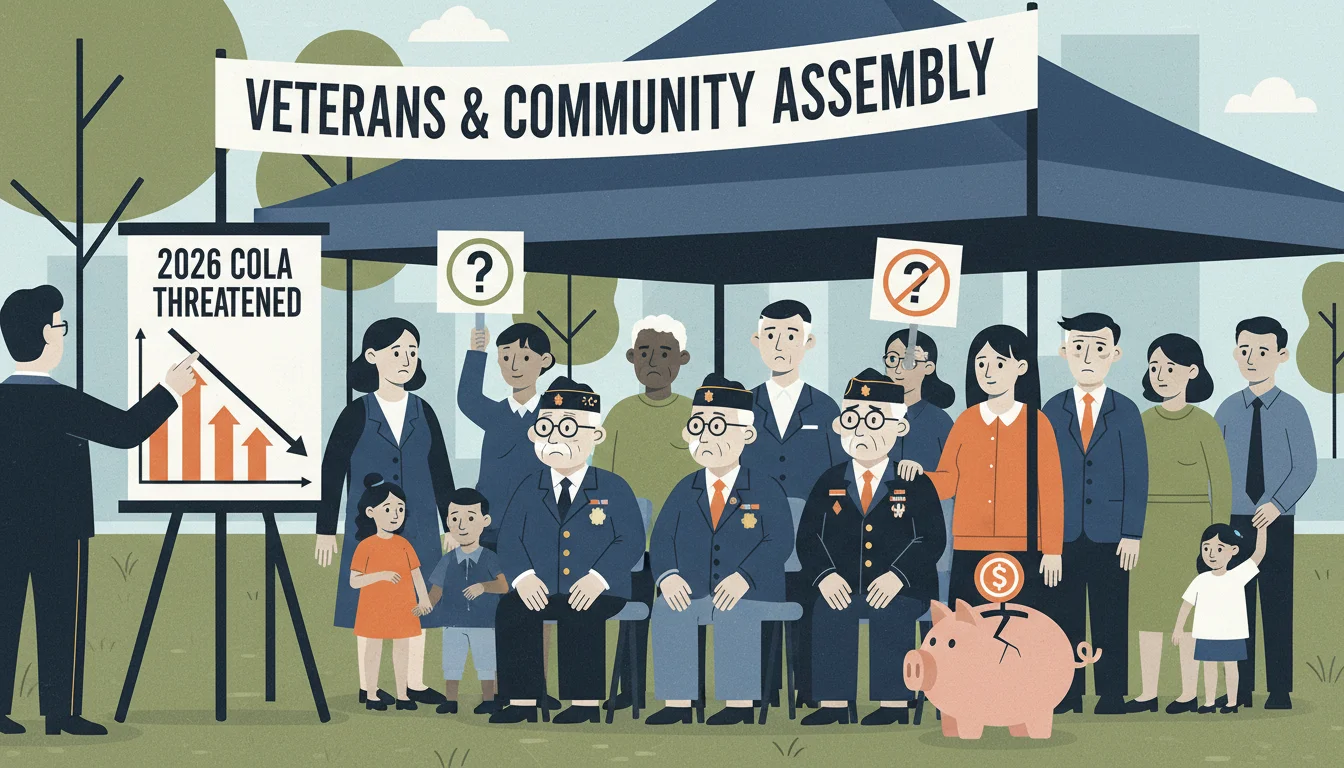
For veterans, earned benefits aren’t a handout, they’re a lifeline, a hard-won recognition of our sacrifice. So when talk about potential veteran benefits cuts started swirling during the recent lame-duck session of Congress, it hit the community hard. The Disabled American Veterans (DAV) immediately went on the offensive, calling out these proposals as a serious threat to the financial security and healthcare for countless service members and their families. What were these cuts, exactly, and what could they mean for you?
Key Takeaways
- In late 2025, the DAV fought legislative proposals aiming to slash Cost-of-Living Adjustments (COLAs) for veteran disability compensation and pension benefits.
- If you’re a veteran worried about benefit cuts, you should immediately review your VA disability ratings and think about filing new claims or appealing old denials.
- Advocacy through groups like the DAV is still absolutely essential, and contacting your representatives in Congress to oppose these cuts can change their minds.
- You have to understand the specific language in any proposed law, because what looks like a minor tweak to a formula can have a huge financial impact on you down the road.
“If asked to sign up again, if the need is there, then I will 100% be there to serve my country alongside my fellow veterans and service personnel.”
The Looming Threat: What Went Wrong First
This problem didn’t just appear out of thin air. For years, Washington’s debates about federal spending have circled around veterans’ benefits. What set off alarm bells in late 2025 were the specific proposals whispered about during the “lame-duck” session, that strange time after an election but before the new Congress takes over. I’ve seen it happen too many times. This is when unpopular bills can get pushed through without much public notice. The proposals weren’t about killing benefits outright (that would be political suicide), but about making subtle, damaging changes to how they’re calculated. A primary target was the Cost-of-Living Adjustment (COLA) formula. Just imagine your grocery bill jumping 5% while your fixed income only goes up by 2%, that’s the kind of slow financial drain these proposals threatened.
They also floated adjustments to eligibility for some healthcare programs, which could have meant higher co-pays or fewer covered services for certain groups of veterans. These weren’t big, flashy cuts that would make the evening news. It was a slow bleed of support that would have hit veterans on tight budgets or those managing chronic health problems the hardest. Some lawmakers were clearly trying to find “savings” without taking the political heat for obvious cuts, but that strategy rarely works because veteran advocacy groups are always watching.
DAV’s Stance: A Clear Condemnation
The Disabled American Veterans (DAV) didn’t pull any punches. As a leading voice for disabled vets, they issued a powerful condemnation of any attempt to cut earned benefits during that lame-duck session. Their entire argument, laid out in official statements, was that veterans’ benefits are earned compensation for service and sacrifice, period. According to a DAV press release from November 20, 2025, the organization was particularly worried about proposals that would:
- Alter the COLA Calculation: This meant switching from the current formula which is tied to Social Security increases, to a different inflation index that would likely be lower. A technical change like that doesn’t sound like much, but it could cost a veteran thousands of dollars over their lifetime.
- Tighten Eligibility for Aid and Attendance: They were looking at imposing tougher asset limits or stricter medical rules for vets who need help with daily activities.
- Increase Healthcare Premiums or Co-pays: This would have shifted more of the VA healthcare costs onto veterans themselves, especially those with service-connected disabilities.
The DAV’s National Commander at the time, whose comments were picked up by outlets like The Associated Press (AP), hammered home the point that Congress has a moral duty to keep its promises to veterans. He argued that any cuts would be a betrayal. When a major veteran organization like the DAV creates that kind of unified opposition, it forces politicians to back down or at least have a public debate, which is exactly what happened here.
The Solution: Vigilance, Advocacy, and Preparation
So, what can you do when your benefits are on the chopping block? You have to get active. You need to stay informed, make your voice heard, and get your own claims in order. This isn’t something you can just wait out.
Veteran homeowners. Want to lower your monthly payments?
See if a VA Cash Out Loan or VA Home Loan can put cash in your pocket or help you buy with $0 down. A specialist will review your options, free.
- VA Cash Out Loan: use up to 100% of your home’s equity
- VA Home Loan: buy a home with $0 down payment
- No cost, no obligation eligibility check





You’re all set.
A VA loan specialist will reach out shortly to review your Home Loan and Cash Out options.
Step 1: Stay Informed and Understand the Specifics
First, you have to track what’s happening in Washington. Don’t get lost in general anxiety. You need specific knowledge. Follow trusted veteran groups like the DAV (DAV.org) and read their legislative updates. They break down the bills and explain how they’ll affect you. Look for the bill numbers and the specific sections that deal with VA funding, like any proposed changes to Title 38 of the U.S. Code. The devil is always in the details. Don’t trust social media rumors, go straight to the source or to news outlets that report on Congress directly.
Step 2: Engage in Targeted Advocacy
Your voice actually counts. When a group like the DAV sounds the alarm, the message gets a lot louder when constituents start calling their reps. You can find the contact info for your U.S. Senators and Representative right on their official websites. A personal letter, email, or even a quick phone call that states your opposition to specific cuts carries real weight. Briefly explain how a cut would affect you or a vet you know. For instance: “I’m calling to ask you to oppose Section 402 of H.R. 7890. As a service-connected veteran, changing the COLA calculation would make it harder for me to afford my medical care.” A brief, personal story works way better than a generic complaint.
When veteran organizations put out a call to action, join in. They often provide scripts or talking points that make it easy to contact your reps. You have to remember that congressional offices keep a tally of these communications, and a big spike in calls about a specific issue tells them that voters back home are paying attention and are not happy.
Step 3: Proactively Review and Strengthen Your Benefit Claims
Even if these particular cuts get stopped, a strong, well-documented claim is your firewall against any future political games with your benefits. This is where being prepared really pays off. If you have service-connected conditions that have gotten worse, or new problems you think are related to your service but haven’t filed for, now is the time to get moving. Pull together all your medical evidence, private and VA records, plus “buddy letters” from friends or family who have witnessed your condition. Why wait?
You should also think about getting help from a Veteran Service Officer (VSO). Groups like the DAV, VFW, and American Legion have VA-accredited VSOs who will help you file claims and appeals for free. They know the VA’s tangled regulations and can help you build the strongest possible case, making sure it’s fully developed. A well-built claim backed by solid medical evidence is a lot harder for the VA to deny or reduce. For example, if your service-connected knee injury has now caused arthritis in your hip, make sure that secondary condition is claimed and documented too. Getting everything on the record is how you get the full benefits you’ve earned.
History shows that when veteran advocates, organizations like the DAV, and individual vets all push back together, they can effectively safeguard our benefits. During this specific lame-duck session, the massive public outcry forced Congress to shelve the worst of the proposed veteran benefits cuts. The threat hasn’t vanished forever, but it shows that organized resistance works.
The direct result of all that work was that the 2026 COLA for disability compensation and pensions was calculated with the established formula, matching the Social Security increase. It wasn’t based on some new, lower index. For millions of veterans, that decision preserved thousands of dollars in income. On top of that, the eligibility rules for programs like Aid and Attendance stayed the same, making sure vulnerable vets didn’t face new hurdles to get the support they needed. It was a clear win and proof that our collective voice is strong.
This whole episode is a stark reminder that the fight to protect our benefits is never over. It takes constant vigilance and informed action from every single veteran and our supporters. You can’t just wait for the next crisis to act, you have to be part of the defense that stops it from happening in the first place.
What is a “lame-duck session” and why is it relevant to veteran benefits?
It’s the time between a general election and when the new Congress is sworn in. It’s a dangerous period because outgoing politicians, who aren’t worried about re-election, can try to pass unpopular laws, including bills that would cut veteran benefits, with less public attention.
How does the Cost-of-Living Adjustment (COLA) affect my VA benefits?
COLA is the yearly increase to your VA disability, pension, and other benefits that’s supposed to match inflation. If they change the formula to give you a smaller increase than the actual cost of living, the real-world value of your benefits shrinks over time.
What is the DAV and what role do they play in protecting veteran benefits?
The Disabled American Veterans (DAV) is a non-profit that helps veterans. They are on the front lines advocating for our rights and benefits by lobbying Congress, providing free help with VA claims, and keeping the public informed about issues that affect us.
If I’m concerned about potential benefit cuts, who should I contact?
You need to contact your U.S. Representative and both of your U.S. Senators. You can find their phone numbers and email addresses on the official House and Senate websites. Be direct about your concerns with specific bills and tell them how it would impact you.
Can I appeal a VA decision if my benefits are reduced or denied?
Yes, you can absolutely appeal VA decisions through their established process. I’d strongly suggest getting help from an accredited Veteran Service Officer (VSO) at an organization like the DAV or VFW. They know how to handle the complex appeal system and can help you get your evidence in order.

Related Articles

32% of Veterans Face Benefit Hurdles: 2026 Policy Fight
32% of veterans struggle with benefits. See how DAV stopped 2026 budget cuts and secured $4B, but new GI Bill threats emerge. Your benefits are at stake.
·
·
5 min read

Veterans Rights: USERRA Protections for 2026
Understand USERRA protections for veterans. Learn about reemployment rights, discrimination, and up to $9,600 in tax credits for employers.
·
·
7 min read

2026 NDAA: Major Shifts for Veterans’ Benefits
Listen to this article · 14 min listen1.0xAudio playback not supported in this browser. Key Takeaways The 2026 National Defense Authorization Act (NDAA) introduces a tiered retirement…
·
·
11 min read

Veterans: 2026 VA Disability Changes Explained
Listen to this article · 10 min listen1.0xAudio playback not supported in this browser.Sergeant David Miller, a Marine veteran of two tours in Afghanistan, stared blankly at…
·
·
8 min read

VOSB Federal Contracts: 5 Growth Hacks for 2026
VOSBs: Sustain federal contract success beyond the 5% set-aside. Learn 5 growth hacks, including GSA Schedules & SAM.gov updates.
·
·
8 min read

Veteran Creative Healing Act: 2024 Political Endgame
Will the Veteran Creative Healing Act pass? Understand how lame-duck sessions delay critical bills like Maria's art therapy access.
·
·
8 min read

Veterans: Diesel Tech Jobs Boom 2032
Veterans, find out why diesel tech jobs are growing 7% through 2032. Your skills are a perfect fit for 28,200 new annual openings.
 ·
·
5 min read

Veteran Data Security: Are DOD-VA Efforts Enough in 2026?
Are DOD & VA protecting your data? See their joint security efforts, including VHA multi-factor authentication, reducing unauthorized access by 90%.
·
·
9 min read