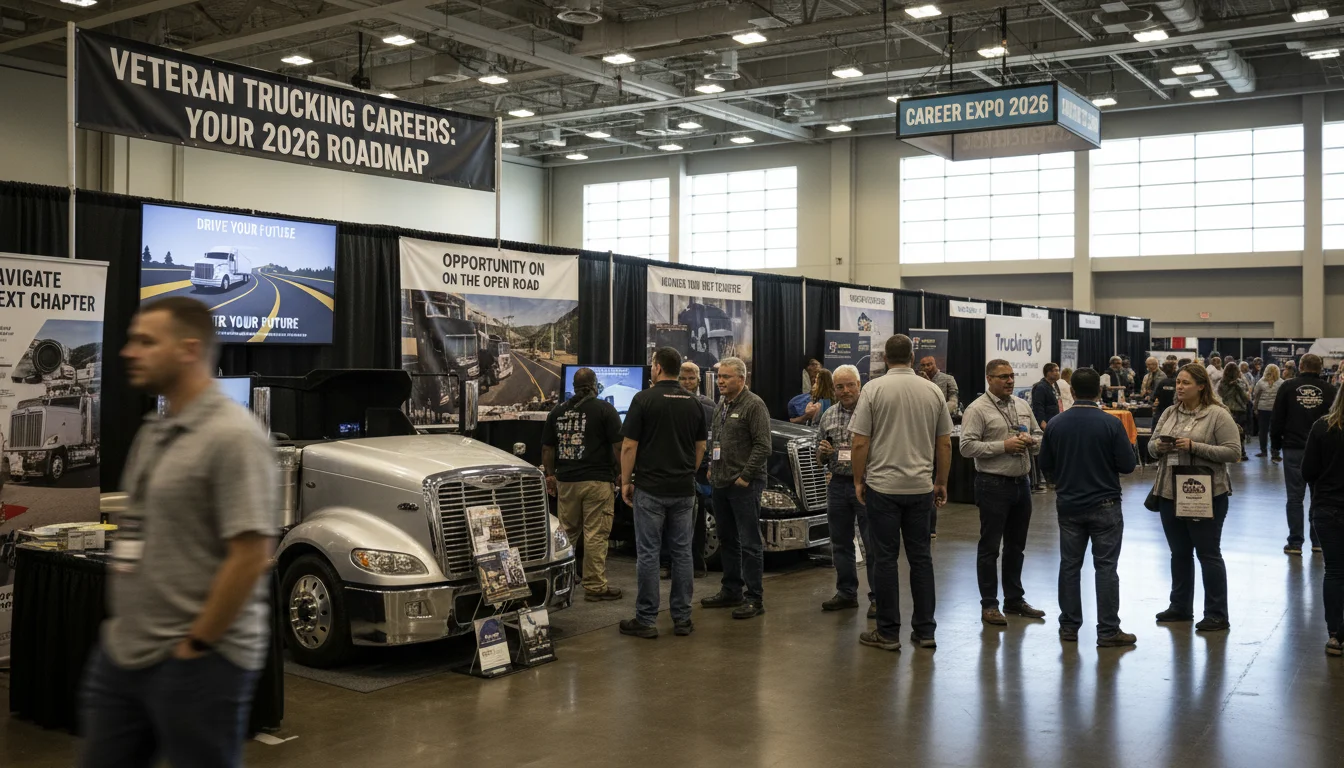
When Master Sergeant David Miller hung up his uniform after nearly twenty years as a logistics specialist in the U.S. Army, he hit the same wall a lot of vets do: what now? You get used to the structure, the team, the mission, it’s your whole world. Civilian life is a completely different animal with its own rules. For a lot of guys like David, that switch feels like a jump into the unknown, but the trucking industry is one place where military discipline and know-how translate directly into solid trucking careers. Is it possible the open road is the right next move for vets who’ve already served?
Key Takeaways
- Vets get hired fast in trucking because their skills with logistics, discipline, and handling vehicles are exactly what companies are looking for. Many carriers actively recruit from the military.
- A new driver with a Class A CDL can expect to make around $55,000 to $65,000 a year starting in 2026, and experienced drivers pull in way more.
- The GI Bill and state-level programs can often cover 100% of CDL training tuition, so you might not have to pay a dime out of pocket.
- Lots of trucking companies have special hiring tracks and mentorship programs just for veteran drivers because they know vets are a good bet.
- Check out companies in the Department of Labor’s HIRE Vets Medallion Program, it’s a clear sign that an employer is serious about hiring and keeping veterans on board.
David’s first few months of job hunting felt like a bad joke. He’d managed complex supply lines under fire, led teams, and operated heavy equipment in every environment imaginable, but the civilian resume workshops just wanted to translate his entire decorated career into “leadership skills.” He needed something real, something that used what he actually knew how to do. It was his wife, Sarah, who finally pointed him in the right direction one Tuesday night at their dinner table in Fayetteville. “You’ve been driving big rigs in worse conditions for years,” she said. It was that simple, and it lit a fire under him.
Even now, in 2026, the trucking industry is desperate for drivers. The American Trucking Associations (ATA) was still reporting a shortage of tens of thousands of drivers in late 2025, a problem that’s only getting worse. That driver gap makes former military folks a hot commodity. “Veterans show up with a work ethic you just can’t teach and a grasp of logistics that takes civilians years to learn,” says Mark Jensen, a recruiter at Swift Transportation, a huge player in the industry. “They get deadlines, they get maintenance, and they get what it means to complete the mission. For us, that’s gold.”
So David started looking into what it would take to get a Commercial Driver’s License (CDL). He was relieved to find out his GI Bill benefits would pay for the whole thing, which was a big deal since private CDL schools can run anywhere from $4,000 to $8,000. He found a few VA-approved schools near Fort Bragg, including Roadmaster Drivers School in Raleigh, which had a solid rep with local vets. Their program was an intense three-to-four-week course designed to get you prepped and passed for the Class A CDL exam.
The process wasn’t exactly a walk in the park. After years of military precision, the mess of civilian paperwork and different state rules was a headache. David remembers one afternoon getting completely bogged down in the North Carolina DMV’s requirements for a hazmat endorsement. “Felt more complicated than deploying to a new theater sometimes,” he told Sarah. But his training took over. You just break down the problem, find your resources, and get it done. He buried his head in the CDL manual, practiced his pre-trip inspections relentlessly, and put in the hours behind the wheel of a practice rig until shifting, backing, and making tight corners felt like second nature.
Veteran homeowners. Want to lower your monthly payments?
See if a VA Cash Out Loan or VA Home Loan can put cash in your pocket or help you buy with $0 down. A specialist will review your options, free.
- VA Cash Out Loan: use up to 100% of your home’s equity
- VA Home Loan: buy a home with $0 down payment
- No cost, no obligation eligibility check





You’re all set.
A VA loan specialist will reach out shortly to review your Home Loan and Cash Out options.
A huge advantage for veteran drivers is the discipline and safety mindset baked into them from their time in service. The Federal Motor Carrier Safety Administration (FMCSA) has a ton of strict rules on hours of service, vehicle upkeep, and driver fitness. Vets are already used to living and breathing by a strict set of protocols, which makes them perfect for an industry where one mistake can be catastrophic. In fact, a 2024 study in the Journal of Transportation Safety & Security found that drivers with a military past had fewer at-fault accidents in their first two years on the job than their non-veteran peers, a stat that definitely makes insurance companies and fleet managers sit up and take notice.
With his Class A CDL in hand, David hit the job market and immediately saw that trucking companies weren’t just open to hiring vets, they were actively chasing them. Companies like Schneider and Werner Enterprises have entire programs built for veteran recruiting, complete with better sign-on bonuses and faster training. He had multiple offers within a couple of weeks. The one that caught his eye was from Southeast Freight Lines, a regional carrier out of Columbia, South Carolina. They offered a dedicated route that would get him home most weekends, which was huge for David and his family. They also had a vet-to-vet mentorship program, pairing new drivers with experienced ones who got the whole military-to-civilian transition thing.
That mentorship program was a lifesaver. David got paired with Frank, a retired Navy Seabee who’d been driving with the company for over 10 years. Frank was the guy who taught him the real-world ropes, from wrestling with Electronic Logging Devices (ELDs) to knowing which truck stops weren’t a nightmare for overnight parking. “The driving’s not the hard part. It’s the quiet,” Frank told him during a stop in Charlotte. “In the service, you’re never alone. Out here, it’s just you and the road for hours. You gotta learn to stay connected.” That was something David hadn’t really prepared for, and Frank’s tips on using apps and setting up regular video calls with his family made all the difference.
From a financial standpoint, the switch to trucking was a smart move. David’s starting pay was solid, about $62,000 a year, and he had clear paths to earn more with performance bonuses and getting endorsements for things like tanker or hazmat loads. On top of that, most big trucking companies provide full benefits packages with health insurance, 401(k)s, and paid leave. For vets looking to build a secure life after the military, the steady paycheck and good benefits in trucking careers are a major pull.
The Department of Veterans Affairs (VA) has programs pointed right at this career path, too. The Veteran Rapid Retraining Assistance Program (VRRAP), for instance, can fund up to a year of training for jobs in high-demand fields, and truck driving is almost always on that list. It’s also a good idea to check out the U.S. Department of Labor’s HIRE Vets Medallion Program, which flags employers that are serious about hiring and keeping vets. David made a point to focus on companies that had earned that award because he saw it as a sign of a workplace that would get where he was coming from.
David’s story isn’t some one-off. Every year, thousands of veterans find a new sense of purpose in the transportation industry. The job has a clear structure, definite goals, and you see the results of your work every time you drop off a load. It just clicks with people who’ve spent their lives in the service. The open road has its own grind, but the skills you learn in the military, being adaptable, solving problems, staying resilient, and committing to the mission, are exactly what separate the great drivers from the good ones. Sure, it’s a demanding job, but it offers an independence and a clear mission that you’ll be hard-pressed to find in other civilian work.
If you’re a vet thinking about what’s next, trucking is a real option that lets you put your skills to work right away in a stable, good-paying job. Look into the CDL programs near you, talk to recruiters who specialize in veterans, and make sure you use the VA benefits you earned. The road in front of you is a long one, but you’re probably better prepared for it than almost anyone else.
What are the real perks for vets who get into trucking?
The industry is hungry for drivers, so vets can get hired quickly with good pay and full benefits. Your military background in logistics, discipline, and handling equipment puts you at the front of the line for companies that know what they’re looking for.
Can I really use my GI Bill for CDL school?
Yes. Lots of CDL schools are VA-approved, meaning the GI Bill can cover your tuition, and sometimes even housing and books. Just make sure you confirm the school you’re looking at is on the VA’s list before you sign up.
What kind of trucking jobs can a new vet get?
You can find all kinds of gigs. There’s long-haul over-the-road (OTR), regional routes that get you home on weekends, local delivery jobs, or specialized stuff like flatbed, tanker, or refrigerated hauling. Many companies have dedicated routes if you want a better work-life balance.
Are some trucking companies better for veterans?
Yes. Big carriers like Schneider, Werner Enterprises, Swift, and J.B. Hunt have specific recruiting programs for vets. They often offer things like sign-on bonuses and mentorship programs. A good rule of thumb is to look for companies with the HIRE Vets Medallion award.
What’s the hardest part of switching from the military to trucking?
The big challenges are usually getting used to the solitude after being part of a unit, juggling life on the road with family at home, learning a new set of civilian rules, and adjusting to a job that’s less structured than military life. Good companies have support systems to help you with all that.



